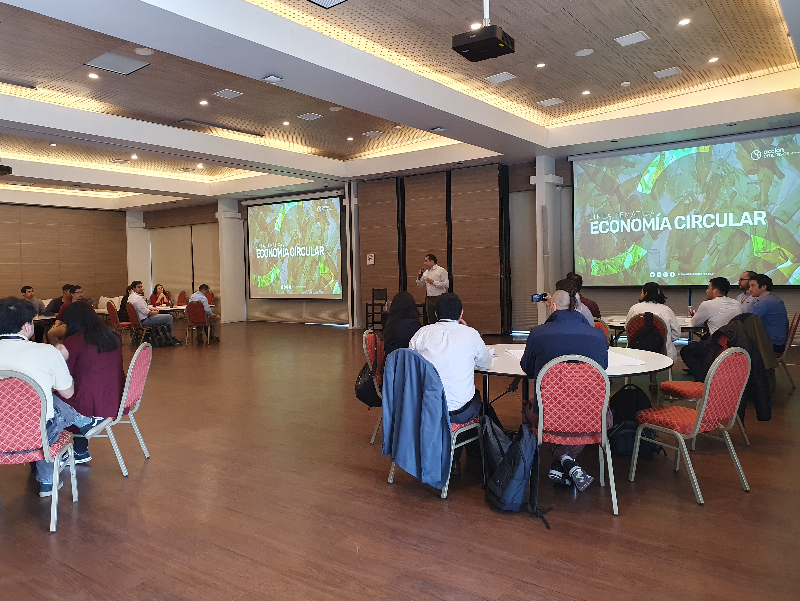
Increasing circularity levels to reduce the amount of waste sent to landfills was the challenge set by ME Elecmetal Sudamérica at its Rancagua Plant, Chile, within the framework of the Clean Production Agreement (APL) “Transition towards the Circular Economy.”
The challenge is to go beyond statements of good intentions by implementing concrete measures. For this reason, Acción Empresas and the Sustainability and Climate Change Agency (ASCC) have led the APL, a public-private agreement supported by CORFO and the Ministries of Environment and Health.
In the case of ME Elecmetal, although the Company places circularity at the core of its business model through the recovery of steel scrap, for example, the APL signed in 2021 focused efforts on materials beyond steel recycling that are within the production chain and require greater management efforts:
- Valorization of discard sands
- Recycling and valorization of ferrous slag
- Reuse of zirconium sands
- Characterization and separation of swept grinding dust
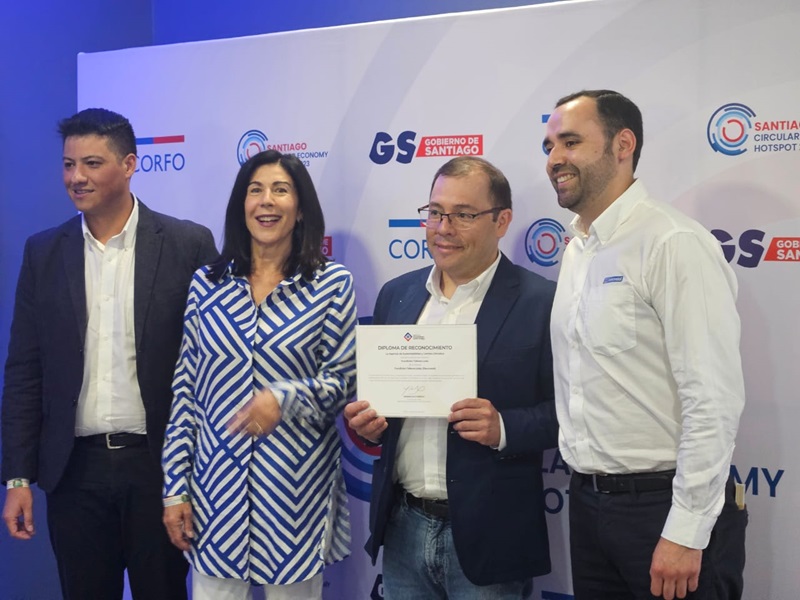
Our Rancagua Chile plant and the community
The objective of the APL is to implement actions to advance towards the circular economy through a methodology that allows measuring and increasing the degree of circularity, using metrics and the implementation of concrete actions aimed, in a first stage, at reducing industrial waste to landfills. To do this, the process begins by establishing the circularity baseline based on the main flows of materials, inputs, waste, and products used and generated. Then, actions that can increase the degree of circularity are prioritized.
The medium and short-term actions defined and implemented involve various benefits such as reduction of landfill waste, production of by-products related to the aggregates sector, job creation in the region, reuse of raw materials within our processes, and cost savings in actions.
Discard Sands
The plant generates an average of 3,100 tons monthly; therefore, it was the first byproduct to be worked on. An alliance was established with a small company so that the sands could be integrated into the manufacture of mortars, concrete, and stabilized materials in various companies related to this market. To increase external recycling, segregation and processing of other sands coming from the breaking of parts and the Sand Plant were implemented. This has resulted in an increase in recycling to 88% as of November 2023.
Recycling of Ferrous Slag as Aggregate Substitute
In the melting process, two main wastes are generated: fusion furnace dust, which is recycled 100% internally, and ferrous slag, with an average monthly generation of 680 tons. In this case, a process of classification, processing, and crushing of the slag has been implemented to produce a conventional aggregate substitute with different characteristics, incorporating it into the same valorization model as the discard sands. Since September 2023, 735 tons of slag have been processed and recycled, transforming it into substitute aggregate.
Zirconium Sands
Material that, due to its resistance to high temperatures, is used to produce bolts and molds, which after crushing generate high discard. Once circulated, it returns to the plant and is reused in the bottoms of electric arc furnaces, compensating for the wear of the refractory material. With a generation of nearly 40 tons monthly, it enables savings in furnace management of almost $25 million. In this case, it is also redirected to a supplier who offers it to bolt foundries for a new process.
Reuse of Grinding Sweepings Dust
The finishing of steel parts is done through abrasive elements. In this process, grinding generates small metal shavings or particles, which contain the same alloy composition as the manufactured parts plus what the abrasive stone contributes, which is analyzed to identify the heavy metals contained. On average, about 12.2 tons are produced monthly. This project is still under development, but the goal is to manage its internal recycling in electric arc furnaces as scrap.
“Our steel foundry business model is very circular, since our main raw material is scrap coming from the same type of parts we manufacture and other specific metal wastes. However, it should be considered that to date about 0.47 tons of waste per ton of part are disposed of in landfills. Therefore, with the actions we are implementing, there is significant reduction potential, contributing to zero waste disposal and increasing the degree of circularity.”
Through the APL and the different initiatives implemented, it was possible to establish the Circularity Baseline at 82%, by managing nearly 4,000 tons of by-products monthly, including discard sands, ferrous slag, zirconium sands, and swept grinding dust. In addition to circularity itself, the economic benefits of its management are added.
Advancing towards circularity allows addressing the current climate crisis and achieving long-term resilience. It also generates benefits for our process and our main stakeholders:
- improves the security of raw material supply
- ensures a positive impact on natural systems, by requiring, for example, less sand from riverbeds
- stimulates competitiveness, innovation, economic growth, and local employment
- increases opportunities to enter new markets
- diversifies our economic performance
- responds to the new needs of customers and investors.
The areas involved are those where the described waste is generated:
- Shakeout
- Sand Plants
- Melting
- Core Molding
All these areas joined the commitment to waste reduction, promoting recycling and/or valorization of waste. Additionally, the Process Engineering and Environment departments played an active role in implementing recycling projects.
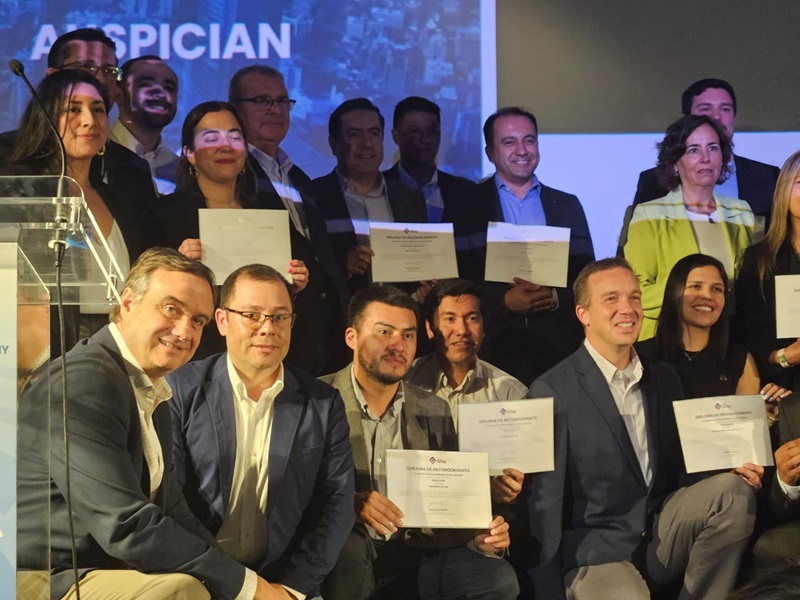
Acción Empresas, ASCC, CORFO, and among the other companies that received recognition are: Aceros AZA, Aguas Antofagasta, Agrosuper (Faenadora San Vicente), Banco Santander, Cervecería AB InBev, Chilexpress, CMPC, Colbún, Cristalería de Chile, Gasco, Grupo Komatsu Cummins, Polpaico Soluciones, Masisa, Metro, SMU, SQM, TPSV, as well as the companies CIC, Essbio, Fundición Talleres Ltda., Rosen, Virutex Ilko/Mamut, and Volta.