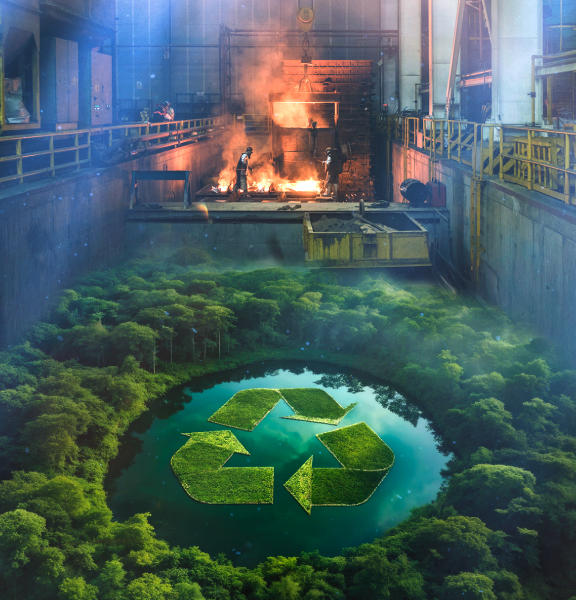
The mining industry is increasingly prioritizing operational efficiency and environmental management. In this context, ME Elecmetal North America has taken a significant step forward on both fronts through an investment in its foundry in Duluth, Minnesota, involving a shift from electric arc furnace (EAF) smelting technology to more sustainable and efficient systems: induction furnaces (CIF).
Raising the bar in green steel
To meet the growing expectations for productivity and environmental performance, ME Elecmetal North America is making a groundbreaking investment in its Duluth, Minnesota foundry. By 2027, the three EAFs will be replaced by two high-efficiency CIFs, a measure aligned with the company’s global roadmap to double its business by 2030 without increasing its carbon footprint, indeed, reducing it.
Strategic investment with community impact
The investment, approved by ME Elecmetal management in May 2025, previously received a US$4.3 million grant from the Minnesota Pollution Control Agency (MPCA) and its Emissions Reduction and Industrial Facilities Criteria Program, funding aimed at reducing pollution in environmental justice communities. The initiative supports cleaner air for neighbors around Duluth’s industrial area while strengthening the global supply chain of which ME Elecmetal is a part.
Expected Benefits
Significant Emissions Reduction:
Approximately 17% reduction in Scope 1 emissions and about 39% in Scope 2 by 2030, also integrating Minnesota’s growing renewable energy mix.
Greater Circularity and Profitability:
The new technology will require higher recycled steel content, less non-recycled raw material, and greater process efficiency supported by improved worker performance, thereby reducing operating costs and strongly supporting ME Elecmetal’s circular economy goals.
Higher Performance, Lower Energy Consumption:
Heating cycle time is reduced from nearly 3 hours to 70 minutes, thus lowering total electricity consumption by 7%.

Cleaner and Safer Workplace:
Significant reduction in noise, dust, and gases; absence of carbon electrodes; as well as less heat exposure, fostering a better work environment that can attract and retain new talent.
Why the change?
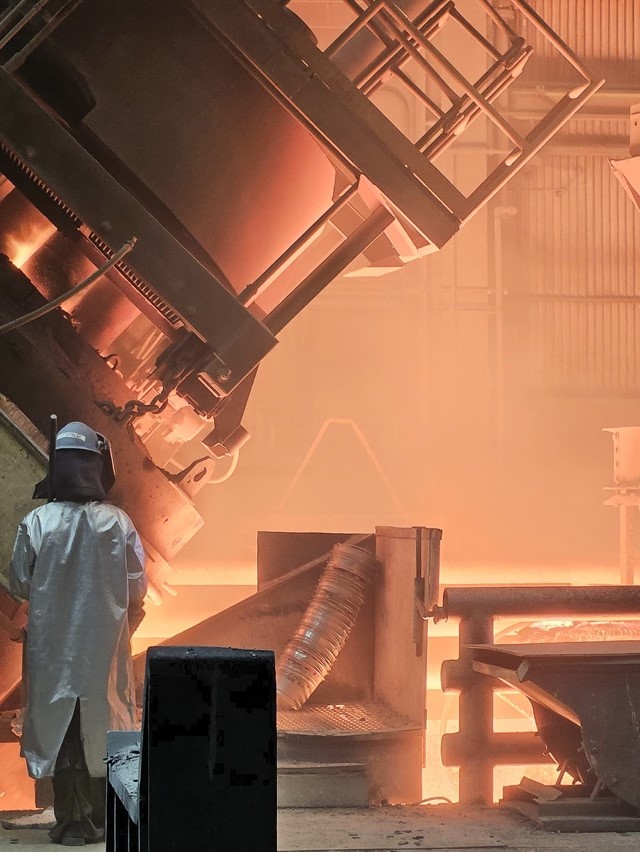
ME Elecmetal’s foundry in Duluth, Minnesota, already stands out for its circularity: over 89% of each process is produced from recycled scrap in its electric arc furnaces (EAF). However, EAFs consume more energy and generate more dust and noise than induction furnaces.
CIF technology takes sustainability a step further.
| VARIABLE | ELECTRIC ARC FURNACE (CURRENT) | CORELESS INDUCTION FURNACE (UPGRADE) |
| Energy Use | Higher per ton melted | Less than 7% of energy consumed |
| GHG Emissions | Moderate to low, but includes gases and electrode consumption. | Significantly low, no electrodes and no combustion. |
| Noise and Dust | High noise levels and visible dust particles. | Quieter operation with minimal dust generation. |
| Consumables | Requires carbon electrodes and frequent refractories. | Lower consumables with no carbon electrodes or refractories. |
| Furnace heating time | About 3 hours per charge | Less than 70 minutes per charge. |
The shift to coreless induction furnace technology consistently accelerates ME Elecmetal’s sustainability roadmap:
- Reduces electricity consumption by 7% and eliminates electrodes, directly lowering Scope 1 and 2 emissions.
- Decreases greenhouse gas and particulate emissions, benefiting workers and nearby communities.
- Drastically reduces noise and dust, creating a cleaner and safer workplace.
- Improves material performance through smoother melt chemistry and lower waste losses, saving raw materials.
In summary, both electric arc and induction furnaces support a steel supply based on circularity, but induction furnaces go further, offering efficiency-driven sustainability aligned with ME Elecmetal’s environmental goals for 2030 and 2050.
“This technology addresses multiple challenges simultaneously: sustainability, energy efficiency, workplace safety, and future demographics… This is one of those projects where everyone wins: the company, the workers, the environment, and the community.”
Solution summary
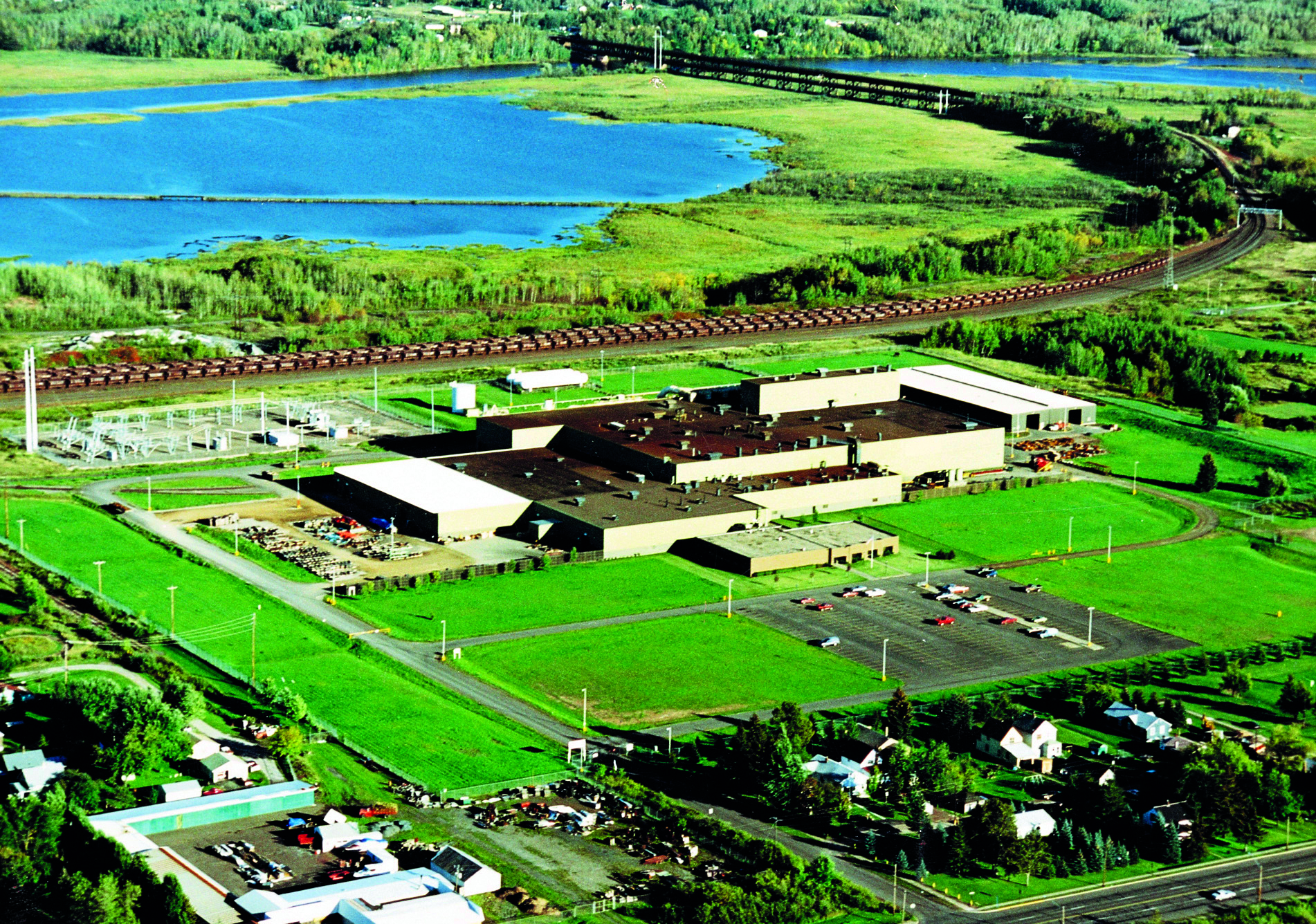
By 2027, Duluth will transition to state-of-the-art coreless induction furnace technology, designed in collaboration with Vulcan Engineering.
The facility:
- Will leverage Minnesota’s power grid, expected to reach 80% renewable energy by 2030.
- Reflects ME Elecmetal’s commitment to doubling its business by 2030 without increasing its environmental footprint, indeed reducing it.
According to the 2024 Sustainability Report, 89% of Duluth’s products already come from recycled materials; induction smelting will further increase that figure and reduce energy consumption.
Empowering people and places
The investment is not limited to infrastructure but also focuses on people. The project has positively impacted Duluth’s team motivation and underscores ME Elecmetal’s confidence in its North American operations and local workforce.
Once fully installed in 2027, the new induction furnaces will enhance production capacity, reduce environmental impact, and ensure long-term competitiveness.
About the MPCA
The MPCA aims to protect Minnesota’s air, land, and water while promoting climate resilience. Through partnerships and innovation grants, such as funding for ME Elecmetal’s furnace conversion, the agency helps communities and industries adopt cleaner technologies that strengthen public health and economic vitality.