
The greater presence and participation of women is a topic of special relevance in the labor market, with a particular focus on mining, considering that it has historically been a male-dominated field. In fact, in all OECD countries, women of working age still have lower employment rates than men of the same age.
Women and men are also segregated across industries and occupations: women are often employed in low-wage industries, such as the service sector; they are more likely to have part-time jobs, and are underrepresented in managerial positions (Source: OECD).
Likewise, as a general reference, the fifth Sustainable Development Goal (UN, 2015), Gender Equality, states that “gender equality is not only a fundamental human right, but one of the essential foundations for building a peaceful, prosperous and sustainable world.” It adds that, although some progress has been made over recent decades, the world is far from achieving gender equality.
Considering this context, the mining sector globally promotes the challenge of increasing the presence of women in different areas of the value chain.
In the case of the mining industry in Chile, according to a report by the Chilean Copper Commission (Cochilco), women represent 10% of the mining workforce, while globally it can reach between 8% and 17%, according to a study conducted by McKinsey & Company (2023).
Our mining clients have recognized the importance of inclusion and diversity issues, specifically greater female presence, for their own operations. Therefore, ME Elecmetal as Partner for Sustainable Mining, besides valuing female performance in mining, has taken on the challenge of greater integration. This is because we are key players in mining management, integrating aspects such as Scope 3 emissions and information in terms of percentage of female participation and associated goals.
ME Elecmetal has outlined its commitment to diversity and inclusion within the organization through the design and implementation of initiatives to promote and encourage the hiring of women across all business lines, globally and regionally.
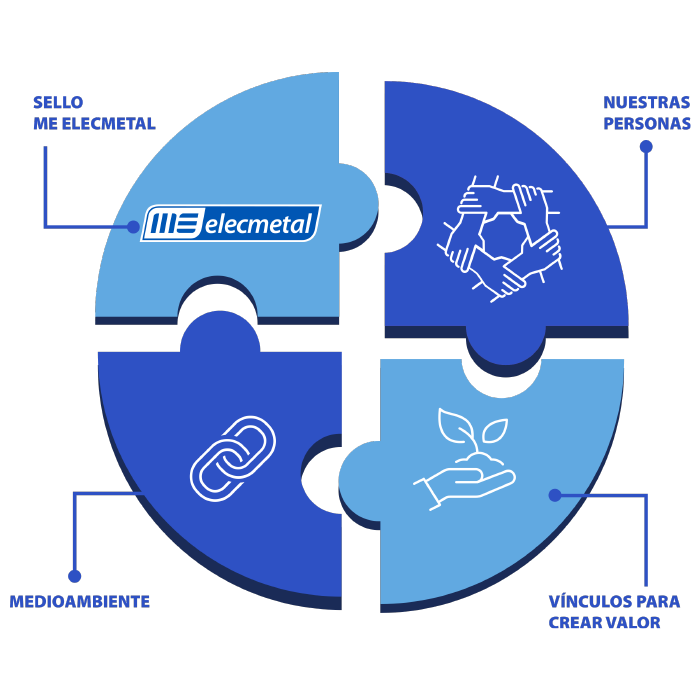
This is contained within the company’s Sustainability Strategy, which consists of 4 Pillars:
- ME Elecmetal Brand
- Our People
- Environment
- Value Creation Connections (suppliers and partners, customers, and communities)
In the case of the Our People pillar, it establishes the commitment to “increase the presence of women at all levels and ranks of our organization, compared to the year 2020.”
“At ME Elecmetal South America, we value the inclusion of women in our various work environments, as their presence adds skills and a different perspective.”
The expected benefits for the client are the improvement of the entire supply chain in terms of greater incorporation of female talent and diversity in their teams, as well as mobilizing the industry through real changes in the value chain and fostering innovation towards the creation of solutions.
Incorporating more women in this sector is not easy; we must reach them before or alongside the training of future professionals and technicians.
Workplace diversity, and specifically women's participation, has been addressed in the various ME Elecmetal operations, as described below:
Chile, ME South America
With a 12% female presence in South America, the People Management area is in a diagnostic phase regarding the presence of women in the company, in collaboration with Comunidad Mujer, after a gap report was prepared during 2023, which was followed by the development of action plans.
Also, in the context of International Women’s Day, a talk by Natalia Duco, called “Real Women,” was held, bringing together ME Elecmetal employees and their families. Duco is a Chilean Olympic athlete specializing in shot put. Her talk aims to share the journey to succeed in a male-dominated world.
Additionally, on Friday, March 8, female employees from Peru, Antofagasta, Santiago, and Rancagua received a gift in recognition of their daily contributions.
United States, ME North America
In the case of the Tempe and Duluth operations, which have an average female presence of 8.1%, they have adopted the Equal Employment Opportunity (EEO) practices, which include aspects such as bias-free hiring, promotion, compensation, and training, among other work processes.
The EEO establishes the principle that all individuals must have equal access to employment opportunities regardless of race, color, religion, sex, origin, age, disability, or genetic information. In other words, through EEO, fair processes with equity and diversity in the workplace are ensured.
Changzhou, ME China
In the case of the operation in China, there is an 11% female participation rate, so they have implemented different practices to promote the increase of female talent.
For this year’s 8M commemoration, an activity is held in addition to giving a gift, either on International Women’s Day itself or the day before, depending on shifts. However, activities with women are not limited to this date; in fact, there are different milestones each year that encourage the participation of professional, operational, and working women.


