
The mining industry faces interruptions in production due to the loosening and shearing of liner-fastening bolts in ball and SAG mills. These stoppages not only halt production but also jeopardize assets, necessitating a substantial allocation of personnel, activities, and resources for rectification.
A significant factor leading to this issue is the gradual loss of bolt tension during equipment operation, often stemming from deficiencies in installation protocol and control. The progressive loss of tension in bolted joints within mill liners can result in pulp leakage and liner fractures. This is a prevalent challenge encountered in numerous mining operations.
The client is currently handling bolt loosening issues reactively, addressing problems when parts fail, and conducting inspections afterward. These reactive actions lead to unscheduled stoppages without clear schedules, impacting equipment availability unpredictably.
Furthermore, inspection and scheduled corrective maintenance programs are formulated based on the historical record of failures, aiming to address deficiencies in protocols and installation control. However, these measures might not always pinpoint the root cause of the issue.
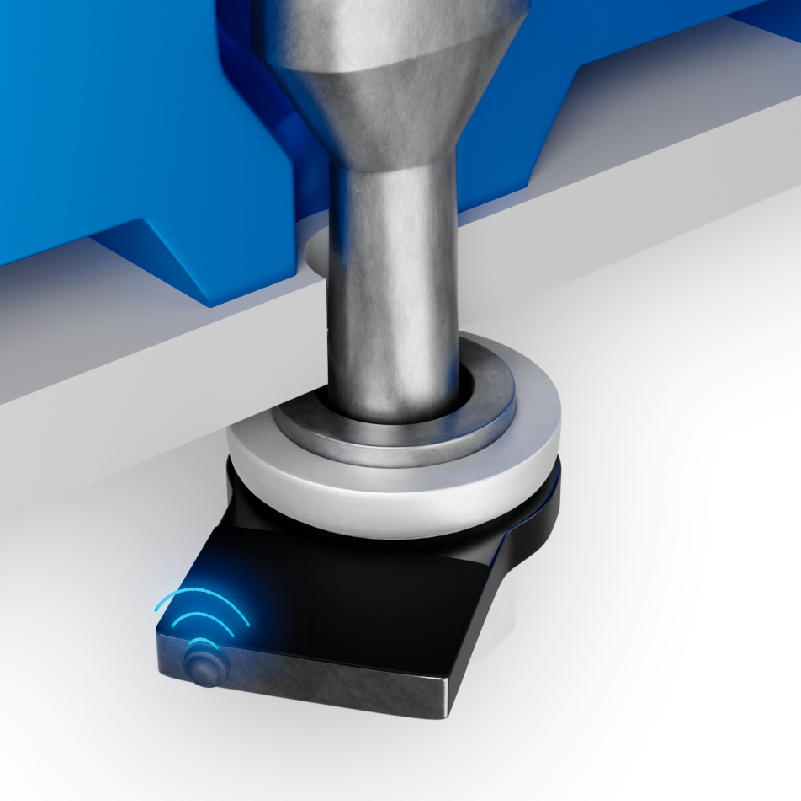
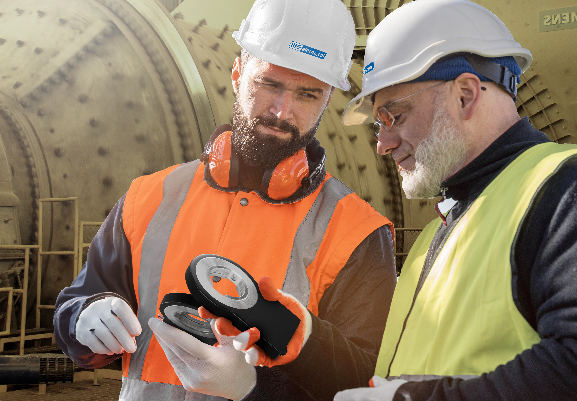
The bolt tension monitoring sensor facilitates the establishment of control measures by continuously evaluating the tightening levels in fasteners. It operates by transforming the deformation that occurs on the collar into the tension applied on the bolt. This allows for real-time monitoring and adjustment of bolt tension levels as needed.
This online tool monitors the loss of bolt tension during operations, ensuring customers have complete reliability in securing liners throughout the operational campaign. Its continuous monitoring capabilities offer assurance and stability in maintaining optimal clamping conditions for the liners.
This solution comprises a holistic assessment of the liner assembly system, mill, and fastening elements to ascertain the optimal tension values. It includes controlling tightening procedures and tension levels during installation. Lastly, it involves the installation of a wireless sensor dedicated to online monitoring of bolt tension throughout the liner campaign. This integrated approach ensures precise tension management and continuous monitoring to maintain optimal conditions.
The latter serves as a predictive tool enabling two key functions:
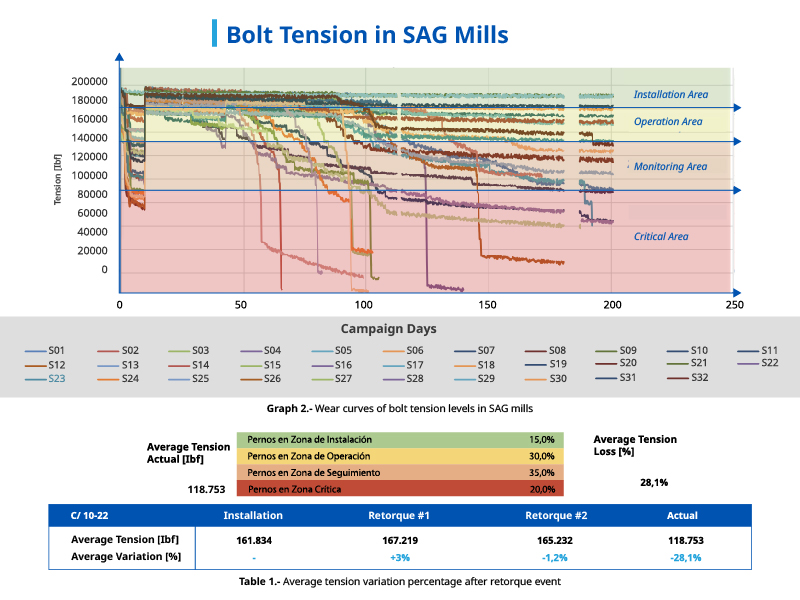
The web platform displays information through a graph illustrating tension versus days of monitoring. This visual representation tracks the tension evolution from sensor installation to the end of the mill campaign, enabling analysis of tension drop trends. This data empowers proactive measures, facilitating preventive actions to address potential issues. The ultimate goal is to prevent failures linked to loose or fractured bolts, often caused by inadequate tension levels, ensuring operational integrity and longevity.
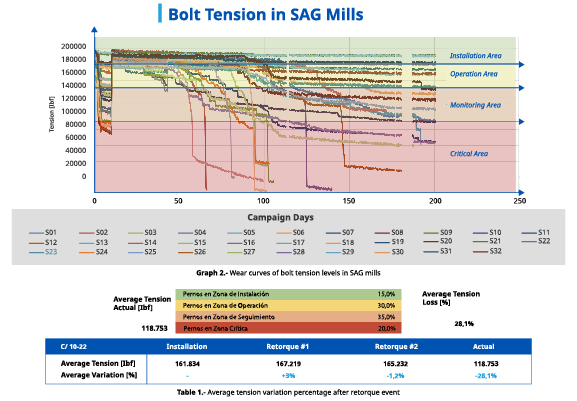
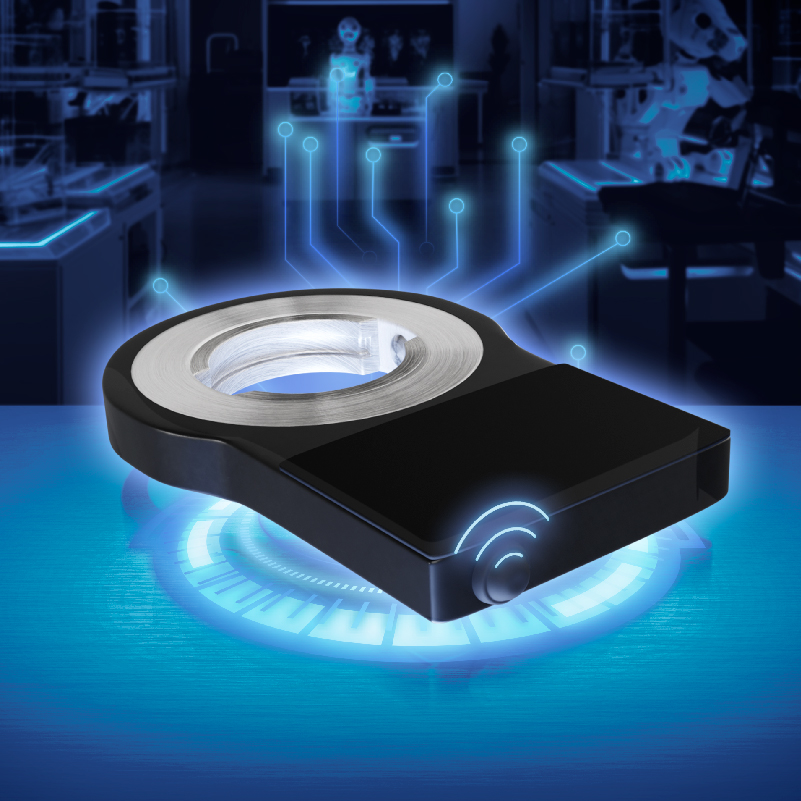
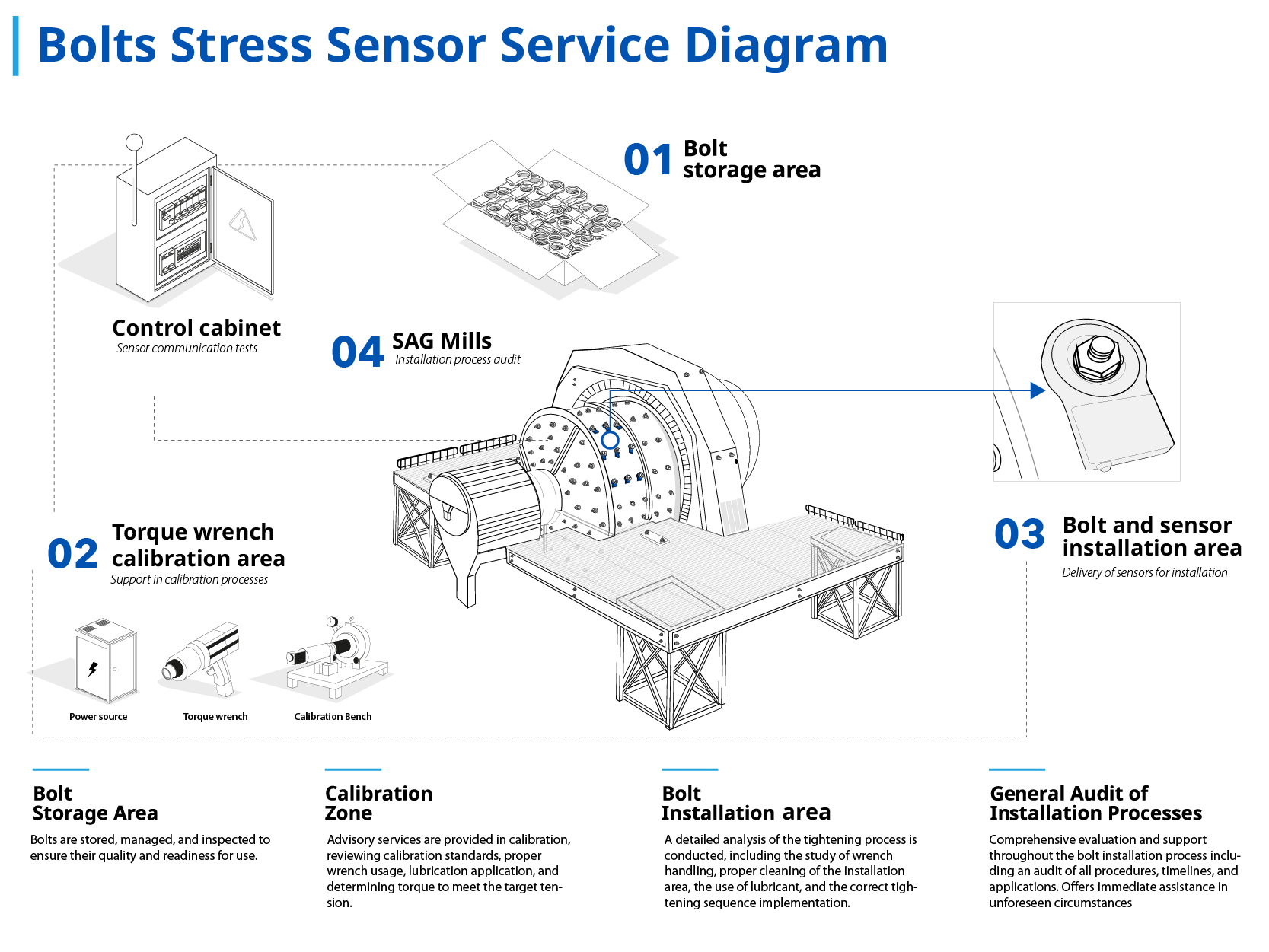
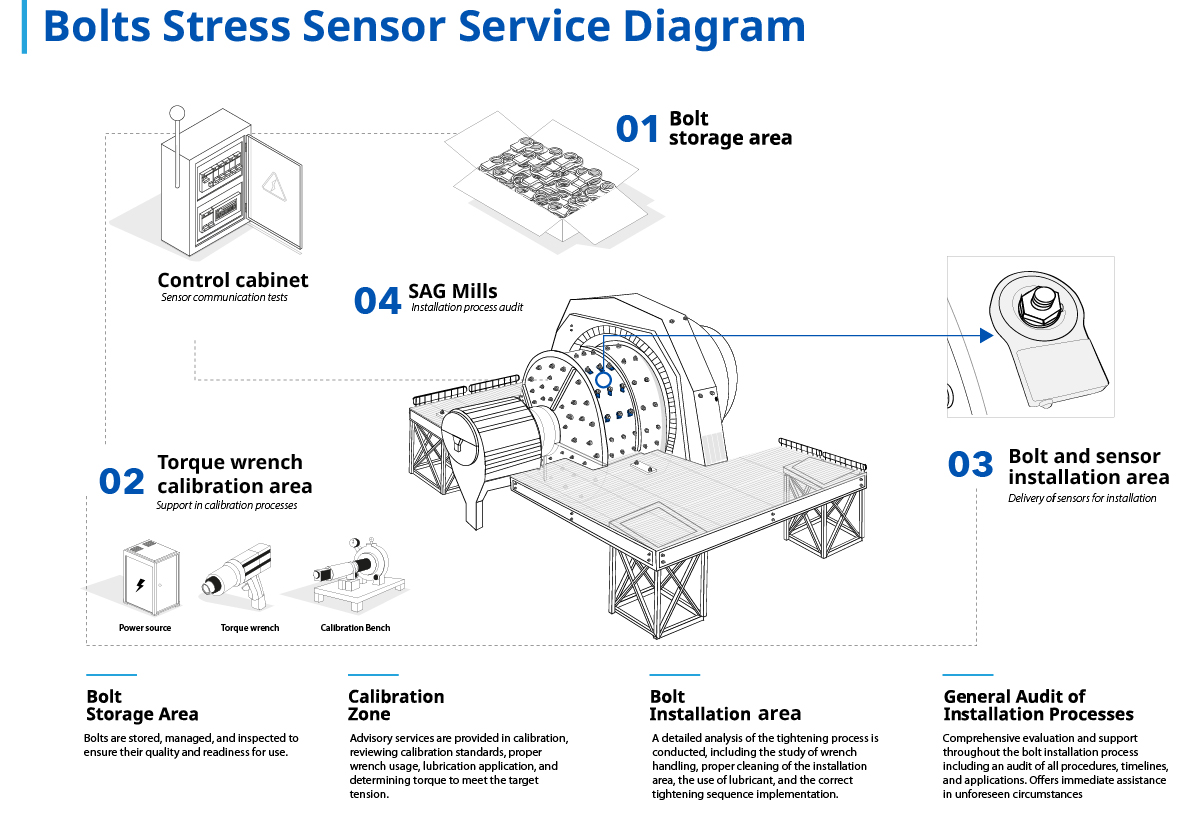
The bolt tension monitoring sensor offers ongoing measurements of bolt tightening, actively monitored by our analysts. It operates within a wireless network, communicating with a cabinet located on the ground that enables data to be displayed on a monitoring platform for easy access and analysis.
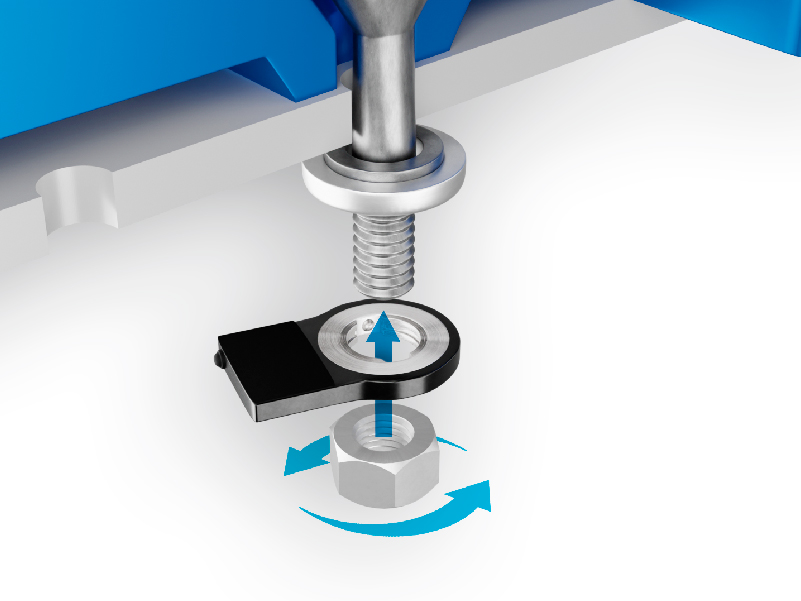
Each sensor corresponds to a device integrated into the assembly of the fastening elements. This installation task is executed swiftly and safely. It involves placing the sensor between the cup collar and the nut, effectively measuring the load, which correlates with the instantaneous tension experienced by the bolt.
The system’s information flow begins with acquiring load data from each sensor, which is wirelessly transmitted to the control cabinet located near the mills. The cabinet then forwards this data to a server for analysis and standardization. Eventually, this dataset is uploaded onto the web platform, enabling authorized users to access and review the tension data.
Rodrigo del Pozo, Manager Early Alert, ME Elecmetal
Maintaining optimal tightening levels within operational ranges creates opportunities to ramp up production levels, allowing for increased processing capacity. However, the restriction often lies in the limitations posed by cutting and loosening bolts. These achievements and added value resulting from the tension monitoring service are documented in the company’s success cases (VAES – Value Added Engineering Services), showcasing the solutions and benefits provided by the monitoring service.
Integrating Valley Forge’s technological proposals, specialized bolts for calibrations, the Clarkester calibration bench, our engineering expertise, comprehensive services, sensors, and in-depth knowledge of the mining process, we strive to establish the most superior casing fastening standard available in the market.